
Follow Me On Pinterest!


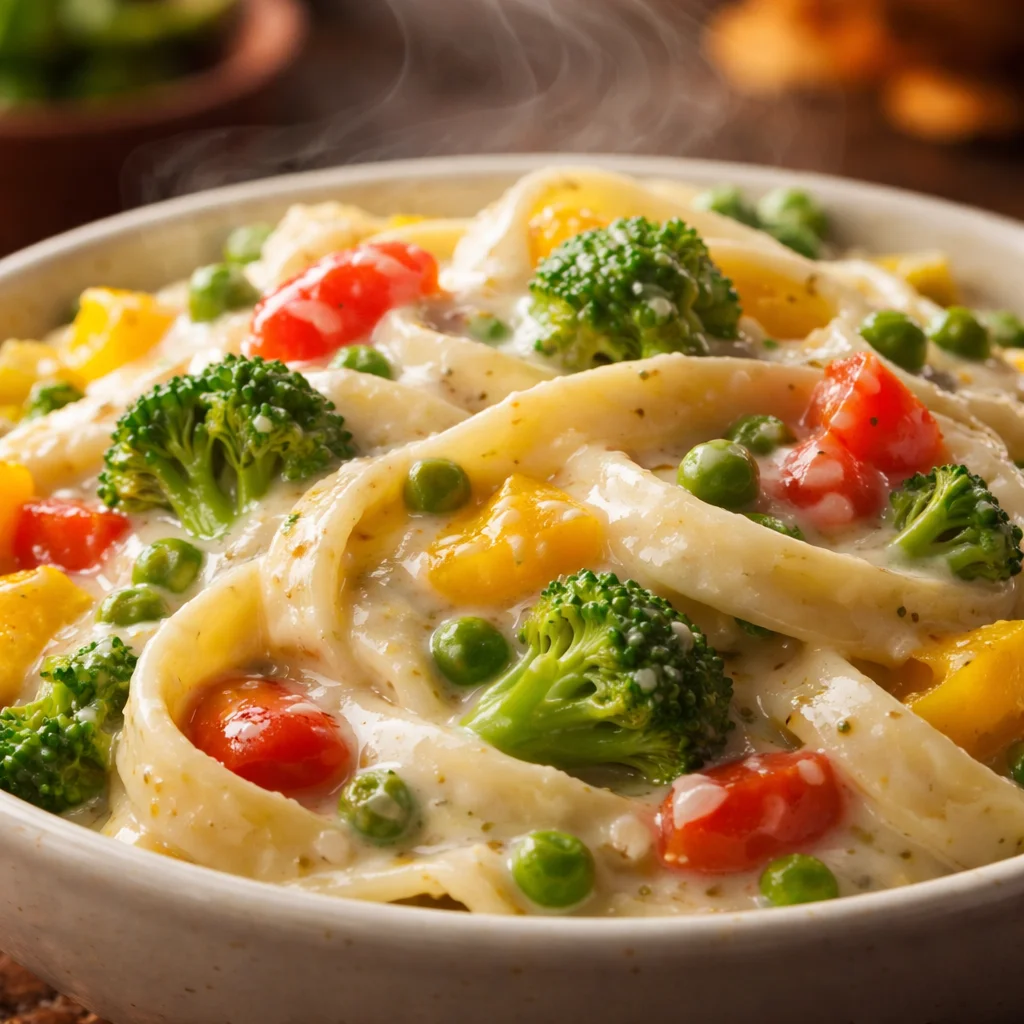
White sauce pasta with vegetables is my go to dinner for those days when I open the fridge, see a random mix of produce, and just cannot deal with anything complicated. It feels cozy, it tastes like comfort food, and it still lets me pretend I made a balanced meal. I started making it back when I was trying to cut down on takeout, and honestly, it saved my weeknight sanity. It is also one of those dishes that looks fancy enough for guests, even though it is very doable. If you have pasta, milk, butter, and a few veggies, you are basically already there. 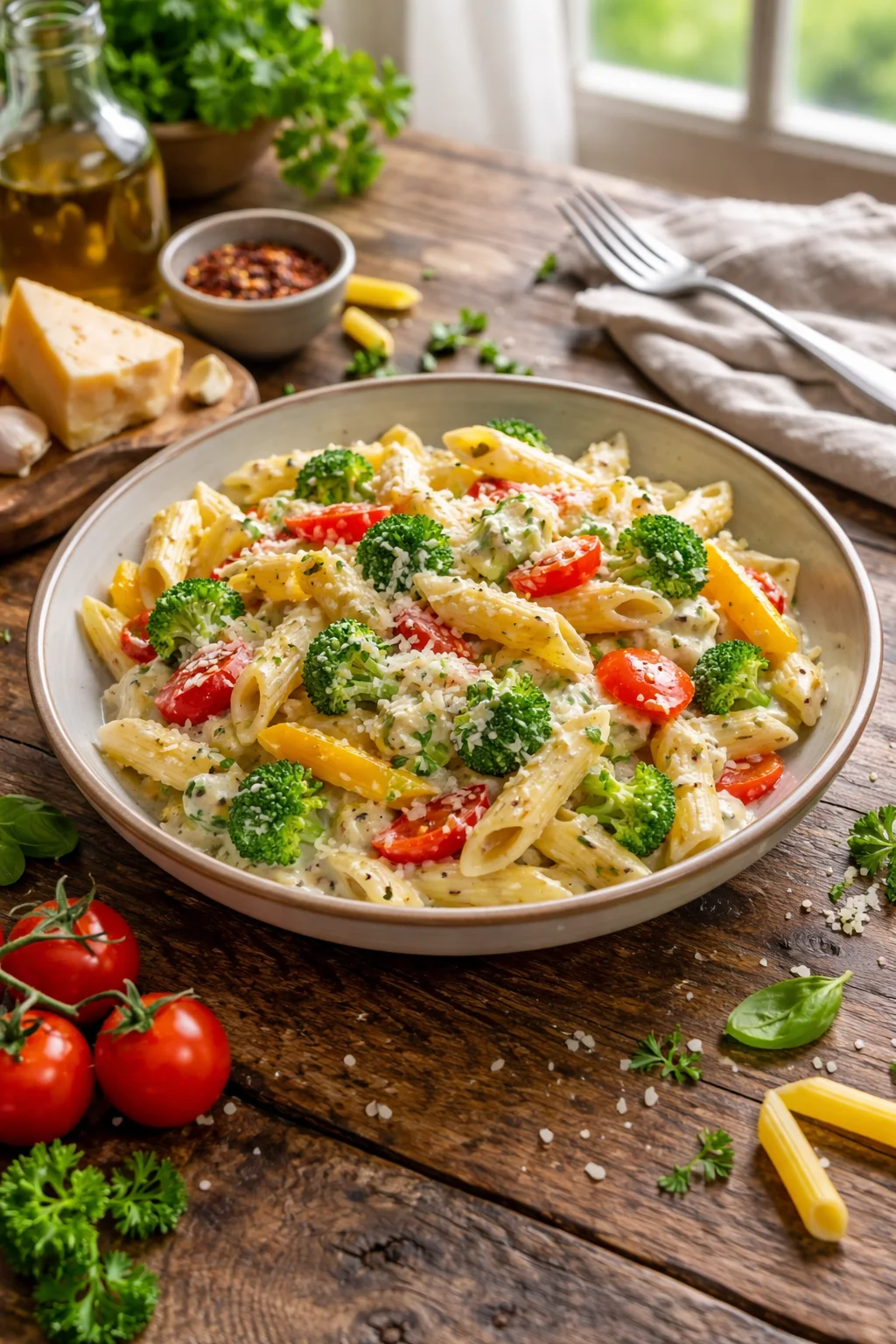
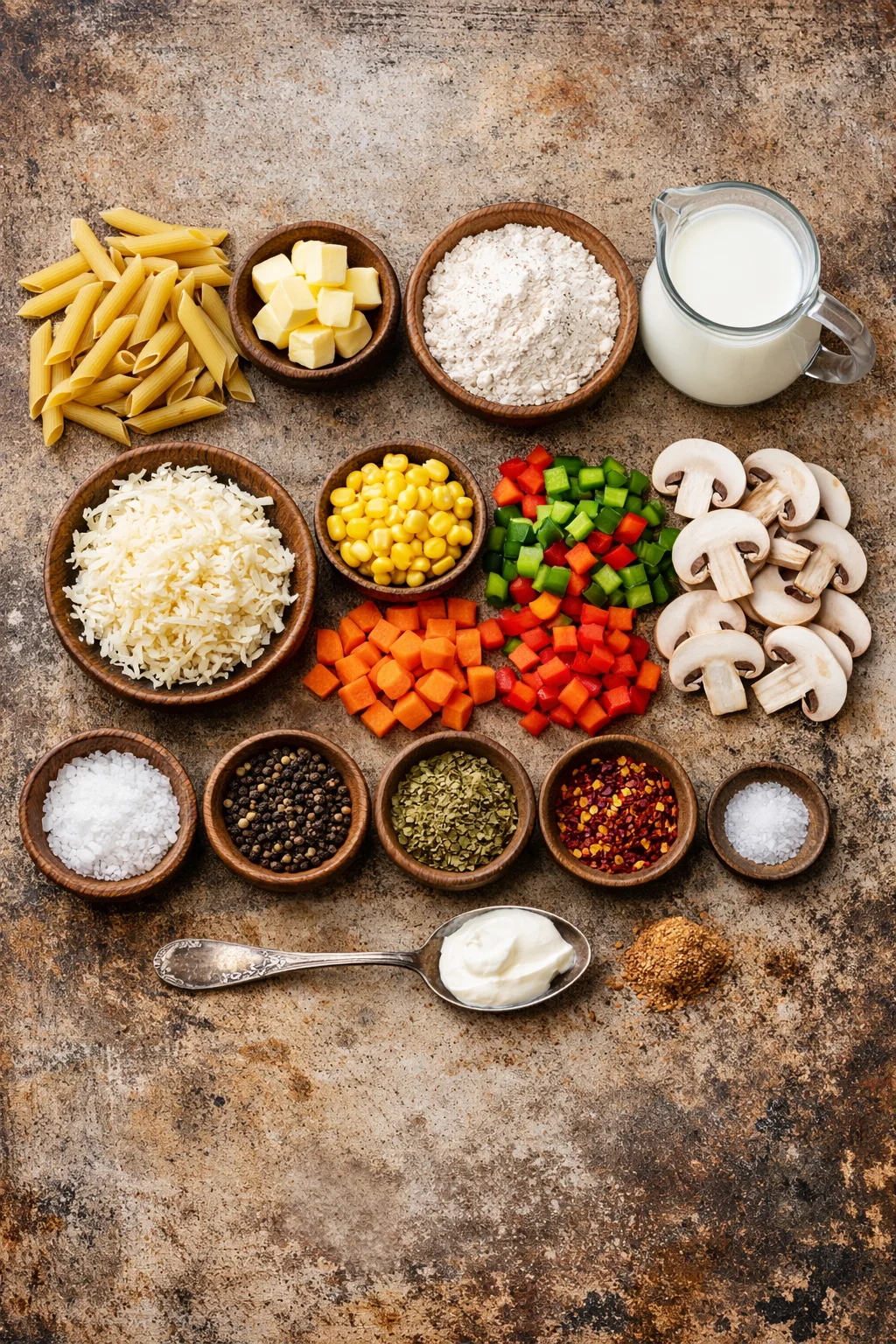
White Sauce Pasta Ingredients
I am going to keep this practical, because this is the part where most people get stuck. They think they need a long list, but you really do not. The main idea is pasta + vegetables + a creamy sauce that holds everything together.
Here is what I usually use, and you can swap based on what you have. If you are missing one veggie, do not panic. The recipe is forgiving.
- Pasta: penne, fusilli, or macaroni work best because the sauce clings to them
- Butter: for that rich base flavor
- All purpose flour: this thickens the sauce
- Milk: whole milk is creamiest, but any milk works
- Cheese: grated mozzarella for stretch, and a little parmesan for punch (optional but so good)
- Garlic: fresh is best, but garlic powder works in a pinch
- Vegetables: I love a mix of bell peppers, sweet corn, carrots, broccoli, mushrooms, and peas
- Seasonings: salt, black pepper, oregano or Italian seasoning, and chili flakes if you like a little heat
- Optional add ins: a spoon of cream, a pinch of nutmeg, or a splash of pasta water to loosen things up
A quick veggie note from my own trial and error: try to cut everything in a similar size so it cooks evenly. Also, if you are using broccoli or carrots, make them small since they take longer than mushrooms or peppers.
Base of White Sauce Pasta Bechamel Sauce
This is the heart of the whole dish. If the sauce turns out well, the pasta turns out well. Bechamel sounds fancy, but it is basically a simple mix of butter, flour, and milk. The first time I made it, I was nervous about lumps. Now I can tell you, lumps only happen when you rush it or pour all the milk in at once.
Here is the simple way I do it:
First, melt butter in a pan on medium heat. Once it is melted, add the flour and stir it constantly for about a minute. It should look like a smooth paste, not dry and crumbly. This step cooks out the raw flour taste, so do not skip it.
Next, start adding milk slowly. I add a little, stir until smooth, then add more. It feels like it is taking longer, but this is the part that saves you from the dreaded lumpy sauce.
Once it starts to thicken, add salt, pepper, and your herbs. I also like a tiny pinch of nutmeg sometimes. Not enough to scream nutmeg, just enough to make people say, wait, what is that nice flavor?
Then comes cheese. If you want your white sauce pasta with vegetables to feel extra comforting, cheese is the shortcut. Add it at the end, off the heat or on low heat, and stir until melted.
“I tried this after a long workday and it turned out so creamy on the first try. My kids actually ate the broccoli without complaining, which honestly felt like a miracle.”
How to Make White Sauce Pasta
Okay, now let us put it all together. This is the part I make on repeat, especially when I want something filling but I do not want to spend the whole night in the kitchen. The trick is to cook the pasta and veggies in a way that keeps them bright and not mushy.
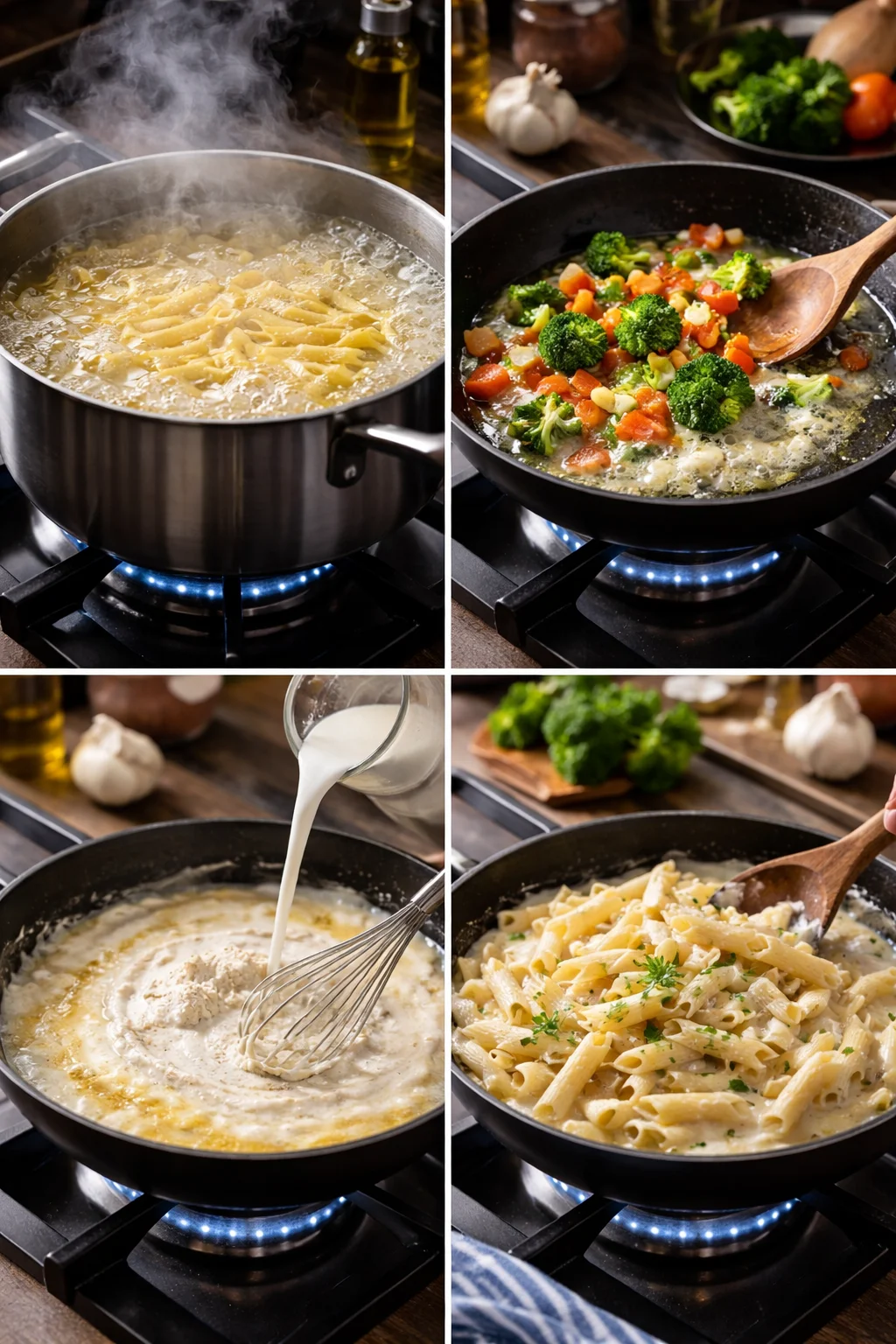
Step 1: Boil the pasta
Cook pasta in salted water until it is just cooked, not too soft. Save about half a cup of pasta water before draining. That starchy water is super helpful if the sauce gets too thick later.
Step 2: Cook the vegetables
In a pan, add a little butter or olive oil, then toss in your vegetables. Start with harder ones like carrots and broccoli, then add mushrooms and peppers, then peas or corn last. You want them cooked but still a little crisp. Soggy veggies ruin the vibe.
Step 3: Make the white sauce
In the same pan or a separate one, make your bechamel. If you are short on time, you can even cook veggies first, move them to a plate, then build the sauce in the same pan so you keep all that flavor.
Step 4: Combine and taste
Add pasta and vegetables into the sauce. Stir gently so everything gets coated. If it feels too thick, add a splash of the reserved pasta water or a little milk. Taste and adjust salt and pepper.
At this point, I always do one thing: I turn the heat off and let it sit for two minutes. The sauce settles, the flavors blend, and it just tastes better. This is also when I usually steal a bite straight from the pan and burn my tongue, because I have no patience.
;
A few practical tips that make a big difference:
Do not overcook the pasta. It will keep softening in the hot sauce.
Keep heat low once milk is in. High heat can make the sauce act weird and grainy.
Season in layers. A pinch of salt in pasta water, a pinch in veggies, and a pinch in sauce tastes better than dumping all the salt at the end.
If you are serving guests, a little extra cheese on top and a sprinkle of oregano makes it look instantly more put together. And yes, this white sauce pasta with vegetables reheats well the next day, but you may need a splash of milk while warming it.
The Secret to One Pot White Sauce Pasta
I love a one pot situation, especially on weekdays when I do not want to see a pile of dishes judging me from the sink. The secret is simple: you cook the pasta in just enough water or milk mixture so the starch stays in the pot, which helps thicken the sauce naturally.
Here is my one pot method that actually works:
Use a deep pan. Add a little butter, saute garlic for a few seconds, then add chopped vegetables that take longer, like carrots or broccoli. After a couple minutes, add the pasta (uncooked), then add water and milk. You want the liquid to just cover the pasta. Add salt and herbs. Let it simmer, stirring often so pasta does not stick.
Once the pasta is cooked and most of the liquid is absorbed, add cheese and black pepper. The sauce turns creamy because of the starch from the pasta. If it looks too thick, add a little more milk. If it looks too thin, let it cook for another minute or two while stirring.
One pot pasta is not about perfection. It is about getting a creamy bowl of comfort with minimal cleanup. And yes, you can still call it white sauce pasta with vegetables, because it hits the same comforting notes, just with less effort.
Related Recipes
If you liked this style of cooking, you will probably enjoy other quick comfort meals with a similar feel. I rotate these when I am bored of the same dinners:
Veggie loaded grilled sandwich with cheese and herbs
Simple garlic butter noodles with mushrooms
Creamy tomato pasta with spinach
Fried rice with leftover vegetables and egg
Baked cheesy vegetables with a crunchy topping
I also recommend keeping a small stash of basics ready: pasta, a frozen veggie mix, and a block of cheese. That combo alone can rescue dinner when you are too tired to think. This is exactly why I keep coming back to white sauce pasta with vegetables. It is reliable, it is flexible, and it always feels like a treat.
Common Questions
1) Can I make this without cheese?
Yes. It will still be creamy if your sauce is thick enough. Add a little extra butter or a spoon of cream if you want more richness.
2) Why does my white sauce get lumpy?
Usually it is because the milk was added too fast or the flour and butter were not mixed smoothly. Add milk slowly and keep stirring.
3) What vegetables work best?
Bell peppers, corn, peas, mushrooms, broccoli, and carrots are great. Use what you like, just cut them evenly so they cook at the same pace.
4) How do I store leftovers?
Keep it in a closed container in the fridge for up to 3 days. Reheat with a splash of milk and stir so the sauce turns creamy again.
5) Can I use wheat pasta or gluten free pasta?
Totally. Wheat pasta works the same. Gluten free pasta can get soft fast, so cook it a little less and watch it closely.
A cozy bowl you will want to make again
If you take one thing from this, let it be this: keep it simple and do not stress the sauce. Once you get the hang of it, white sauce pasta with vegetables becomes one of those recipes you can make without even thinking. It is creamy, comforting, and a smart way to use up whatever vegetables you have. If you want another version to compare notes, I have genuinely enjoyed reading White Sauce Pasta with Vegetables – My Food Story because it is helpful when you want a slightly different approach. Now go grab that pasta from your pantry and make yourself a bowl that feels like a little reward.
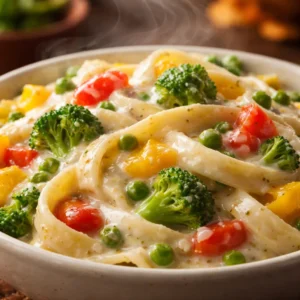
White Sauce Pasta with Vegetables
A cozy and creamy dish that uses simple ingredients to create a comforting meal, perfect for busy weeknights.
Ingredients
Main Ingredients
- 8 oz Pasta (penne, fusilli, or macaroni) Use your choice of pasta for best sauce clinging.
- 2 tbsp Butter For a rich base flavor.
- 2 tbsp All-purpose flour To thicken the sauce.
- 2 cups Milk Whole milk is creamiest, but any will work.
- 1 cup Grated mozzarella For a creamy texture.
- 1/4 cup Grated parmesan Optional, but enhances flavor.
Vegetables
- 1 cup Bell peppers, chopped Add color and nutrition.
- 1/2 cup Sweet corn Adds sweetness.
- 1 cup Carrots, diced Cut small for even cooking.
- 1 cup Broccoli, chopped Add towards the end to avoid overcooking.
- 1 cup Mushrooms, sliced For an earthy flavor.
- 1 cup Peas Add last to maintain crispness.
Seasonings
- 1 tsp Salt To taste.
- 1 tsp Black pepper To taste.
- 1 tbsp Oregano or Italian seasoning For added flavor.
- 1/2 tsp Chili flakes Optional, for heat.
Optional Add-ins
- 1 tbsp Cream For extra richness.
- 1/4 tsp Nutmeg A pinch for warmth.
- 1/2 cup Reserved pasta water To loosen sauce if too thick.
Instructions
Preparation
- Boil the pasta in salted water until just cooked. Save half a cup of the pasta water before draining.
- In a pan, add a little butter or olive oil and then the harder vegetables like carrots and broccoli. After a couple of minutes, add mushrooms and peppers, followed by peas or corn last.
Make the White Sauce
- In the same pan or a separate one, melt butter and mix in flour to create a smooth paste.
- Gradually add milk, stirring constantly until it starts to thicken. Season with salt, pepper, herbs, and a hint of nutmeg.
- Remove from heat and stir in cheese until melted.
Combine
- Add the cooked pasta and vegetables to the sauce, stirring gently until everything is well-coated.
- If the sauce is too thick, add a splash of reserved pasta water or milk. Let sit for two minutes to meld flavors.
Notes
Reheat leftover pasta with a splash of milk. Do not overcook the pasta initially as it will continue cooking in the sauce.