
Follow Me On Pinterest!


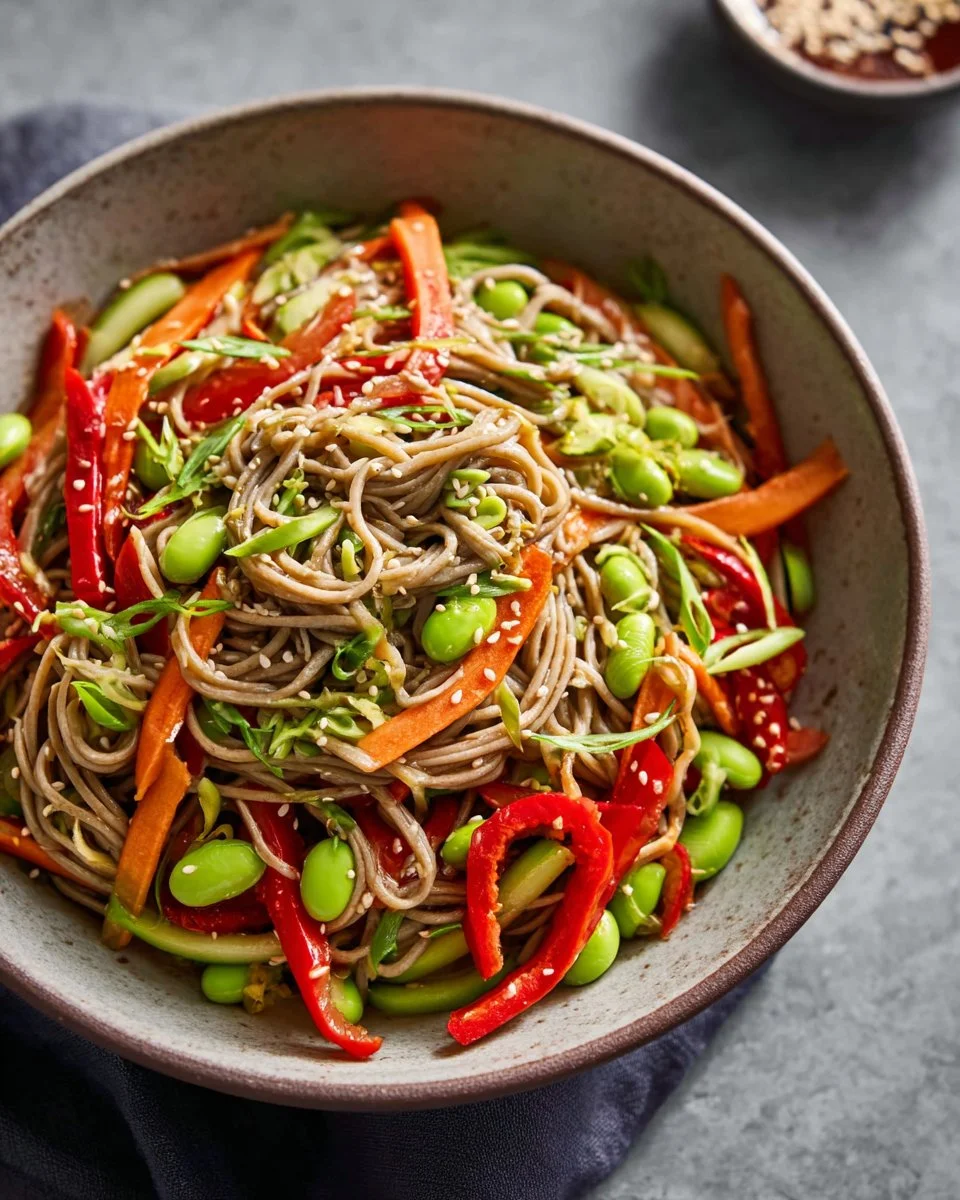
Cooking can feel like a chore some days, can’t it? But there are moments when you just find your rhythm and create something that genuinely feels good—like this Soba Noodle Salad. It’s one of those meals that makes you feel refreshed and satisfied without weighing you down, and honestly, it’s become a staple in my kitchen.
I stumbled upon this dish during my early culinary explorations into Asian cuisine. The combination of textures and bright flavors quickly made it a favorite. You’ve got the noodles, which have a pleasant nutty quality, and then the crunchy vegetables that add a delightful freshness. Trust me; this salad is incredibly adaptable—perfect for everything from a quick weeknight dinner to a fun potluck dish.
Why this one’s worth making
Let’s talk about what makes this soba noodle salad special. For starters, soba noodles are made from buckwheat, giving them a unique flavor, plus they’re rich in protein and fiber. This dish isn’t just about filling your belly; it’s about providing wholesome nutrition without sacrificing taste.
The dressing is where the magic happens—ginger, lime juice, and a hint of honey balance beautifully to create a zing that will awaken your taste buds. And if you like a little kick, the Sriracha adds just the right amount of spice without overwhelming the entire dish. It’s a combination that makes you want to go back for seconds, and if you play your cards right, you might even have some leftovers.
A closer look at the ingredients
-
8 ounces soba noodles: These buckwheat noodles are your base. They’re chewy and have a slightly nutty flavor. If you’re gluten-free, look for 100% buckwheat soba for an unadulterated experience.
-
2 teaspoons sesame oil: This oil adds a lovely nuttiness. Use toasted sesame oil if you want an even richer flavor.
-
3 green onions: A bit of crunch and a mild onion flavor. I tend to slice them on a diagonal—looks fancy, right?
-
1 red bell pepper: Sweet and vibrant. It adds color and crunch, and you can swap this with a yellow one if you want to switch things up a bit.
-
1 large carrot: Thinly sliced (or julienned if you’re feeling ambitious). Carrots bring sweetness and that lovely crunch.
-
1 cup edamame, shelled: These little green gems are packed with protein and a vibrant pop of color. If you can’t find frozen, fresh will work too.
-
3 tablespoons sesame seeds: Toasted for a bit of nuttiness—they make everything feel more substantial without being heavy.
-
1 tablespoon grated ginger: For that zingy, fragrant lift. Use fresh ginger if you can for the best flavor.
-
2 tablespoons fresh lime juice: Bright, fresh, and tangy—this elevates the whole dish.
-
1 tablespoon soy sauce: Adds depth and umami. Tamari is a great gluten-free option if needed.
-
1 tablespoon rice vinegar: Sweet and tangy—don’t skip this; it rounds out the flavors beautifully.
-
1 tablespoon honey: A touch of sweetness to balance the tang. Maple syrup makes for a good vegan alternative.
-
1 clove garlic, minced: For that aromatic kick. Fresh garlic really makes a difference here.
-
2 teaspoons Sriracha: Optional but recommended if you like a little heat. It’s a nice way to customize according to your palate.
Let’s get cooking
-
Begin by cooking the soba noodles according to the package directions. Once done, strain and rinse them under cold water to halt the cooking process. This not only cools them down but helps prevent stickiness—no one likes a clump of noodles.
-
In a large bowl, toss the cooled noodles with 2 teaspoons of sesame oil until they’re well coated. Then pop it in the fridge while you prepare everything else.
-
In a medium bowl, combine the sliced green onions, red bell pepper, carrot, edamame, and sesame seeds. Just give it a gentle toss to mix.
-
Now, let’s whip up the dressing. In a small bowl, whisk together the grated ginger, lime juice, soy sauce, rice vinegar, sesame oil, honey, minced garlic, and Sriracha. Taste this—adjust if you want more tang or sweetness depending on your preference.
-
Retrieve the chilled noodles from the fridge. Top the noodles with your vegetable mixture and pour the dressing over everything. Toss it all together until the noodles and veggies are well-coated.
-
You can serve it right away, or let it sit in the fridge for a bit to allow the flavors to meld—a little marinating time never hurts.
Best way to enjoy it
Serve this salad chilled, either as a light main dish or a robust side. It’s excellent on its own but pairs wonderfully with grilled chicken or tofu for some added protein. I usually like to garnish it with a few additional sesame seeds and maybe some extra sliced green onions for color.
You could also serve it alongside some steamed dumplings or a light miso soup for a full meal.
Keeping leftovers fresh
If you have any extras, store them in an airtight container in the fridge. The salad will last about 2-3 days, though I recommend eating it within the first day or so for the best texture. There’s no need to reheat; just enjoy it cold.
Helpful cooking tips
-
If you’re prepping ahead of time, keep the dressing separate until you’re ready to serve. This keeps everything fresh and crunchy.
-
Don’t skimp on rinsing the noodles; it’s essential for the right texture.
-
You might consider adding some protein—a grilled chicken breast or sliced tofu works wonderfully here.
Creative twists
Feel free to switch out the vegetables based on what you have on hand. Cucumber slices, snap peas, or even shredded cabbage can work beautifully in this dish. You can turn the heat up by adding more Sriracha or incorporating some sliced jalapeños.
Your questions answered
-
Can I use regular pasta instead of soba?: You can, but keep in mind it will alter the flavor and texture slightly.
-
How long does prep take?: About 20-30 minutes if you’re nimble with your knife skills.
-
Is this dish vegan?: It sure is! If you substitute honey with maple syrup, you’re all set.
-
What happens if I can’t find edamame?: You can use peas or even cooked chickpeas as a substitute.
-
Can this salad be frozen?: I wouldn’t recommend it—noodles and veggies don’t freeze well together.
This Soba Noodle Salad stands out not just for its flavor but for its versatility and nutritional benefits. It’s a dish you can adapt to your tastes and what you have on hand, and the vibrant colors alone are enough to make you smile.
So, dive in, give it a try, and don’t hesitate to play around with the ingredients. Cooking is all about expression, and I know you’ll make it your own. From my kitchen to yours, happy cooking!
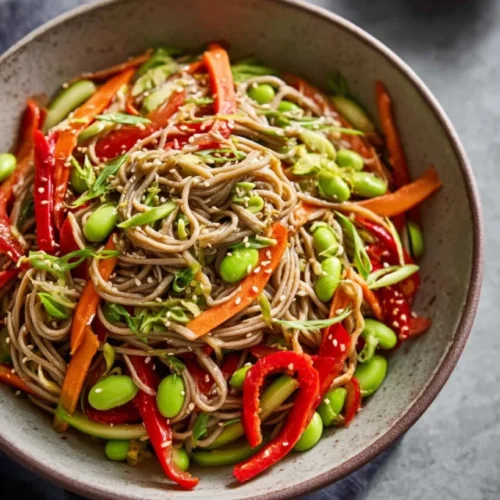
Soba Noodle Salad
A refreshing and nutritious soba noodle salad featuring crisp vegetables, a zesty dressing, and the rich flavors of buckwheat noodles.
Ingredients
Main Ingredients
- 8 ounces soba noodles Look for 100% buckwheat for gluten-free.
- 2 teaspoons sesame oil Use toasted for richer flavor.
- 3 green onions Sliced on a diagonal for presentation.
- 1 red bell pepper Can substitute with yellow bell pepper.
- 1 large carrot Thinly sliced or julienned.
- 1 cup edamame, shelled Fresh or frozen works.
- 3 tablespoons sesame seeds Toasted for extra flavor.
- 1 tablespoon grated ginger Fresh is best for flavor.
- 2 tablespoons fresh lime juice Adds tang to the dish.
- 1 tablespoon soy sauce Use Tamari for gluten-free.
- 1 tablespoon rice vinegar Sweet and tangy flavor.
- 1 tablespoon honey Maple syrup as a vegan alternative.
- 1 clove garlic, minced For aromatic flavor.
- 2 teaspoons Sriracha Optional for heat.
Instructions
Preparation
- Cook the soba noodles according to the package directions.
- Once done, strain and rinse them under cold water to halt cooking.
- Toss the cooled noodles with 2 teaspoons of sesame oil in a large bowl.
- Refrigerate the noodles while preparing the remaining ingredients.
Mixing Ingredients
- In a medium bowl, combine sliced green onions, red bell pepper, carrot, edamame, and sesame seeds.
- Gently toss to mix.
Dressing
- In a small bowl, whisk together grated ginger, lime juice, soy sauce, rice vinegar, remaining sesame oil, honey, minced garlic, and Sriracha.
- Taste and adjust the seasoning if needed.
Assembly
- Retrieve cooled noodles from the fridge and top with the vegetable mixture.
- Pour the dressing over the salad and toss until well-coated.
- Serve immediately or let sit in the fridge for flavors to meld.
Notes
Store leftovers in an airtight container in the fridge for 2-3 days. Best enjoyed cold. Keep dressing separate if preparing in advance.